


9 ways to share testimonials, client work, and case studies

When I first started selling the case study copywriting offer, I quickly realized clients didn’t know how to share their testimonials and case studies.
Clients weren’t using it. At first, I presumed they hated it. I was nearly going to scrap the offer at the thought.
It made me slightly nauseous at the thought, ‘You paid me money to do this and you’re not using it?’
But after a few DM conversations, I realized they just didn’t know how to use it.
Which quickly became another problem.
Whenever I deliver a project, I’m always asking, “How could it have gone better?”
Prioritizing client experience and delivery over getting new clients (yes, I truly believe this) is 100% why my business has grown as well as it has.
Because reflection does three things:
– What was really good about the offer (lets me know what to improve on in my messaging)
– client feedback outside the feedback form (DMs, emails, voice notes) are ways I can talk about my offer and improve on it.
– what could’ve been better so I can change it the next round
That last one is reason why I switched on the waitlist early Jan, and reduced my deliverables + price for the first tier of Critic’s Choice, my DFY case study offer.
So when I realized in May 2025 that some clients weren’t using it, I just asked them.
They told me, “It’s great but i just figured i’d leave it in my portfolio.”
Yeah. I’m not letting them do that because case studies are assets that you can use to sell more of your offer.
And if nobody’s seeing it, you’re not going to get the best use-case out of it.
Does this mean i’m telling clients to post more about it on social media?
Nope, that would be severely misguided, especially for the clients who don’t use (or hate) social media.
So, I created the tiniest mini-guide for them and figured if you’ve got social proof you’re not using to sell, it might be helpful to you.
If you’ve got good social proof and case studies you want people to see, here’s how you make use of it:
1. Present it as a Testimonial across all pages of your website.
These testimonials should be short, but ROI-filled, headlined by a quote taken from the testimonial, that speaks to the biggest transformational aspect.
You want to make sure it’s present across other pages of your website (including contact) and in your proposals. This makes it the easiest way for you to share testimonials to anyone visiting your site, without having to do the extra work.
2. Send it to leads before and after the discovery call, in your discovery call workflows.
This is the best way to have them sold to before they even get on the call.
However, I don’t recommend using it on the discovery call. You want to use the case study to build and reinforce trust, allowing them to be sold to). But that needs to happen before a sales call.
Instead walk them through the live projects, or docs with screenshots.
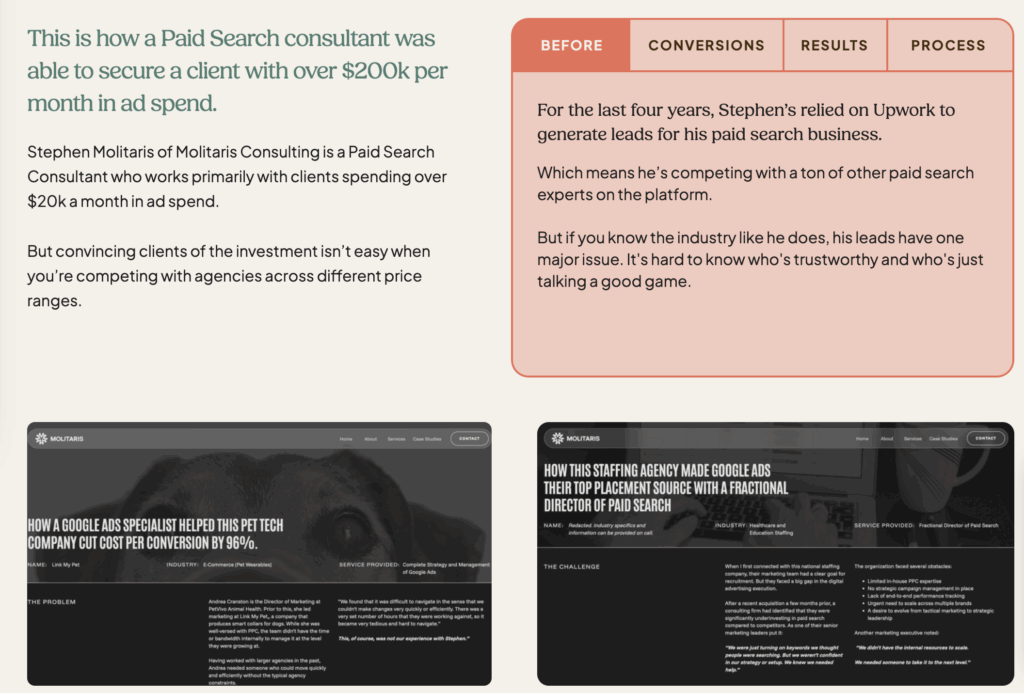
3. Create mini-case studies on your sales page.
Normally in sales pages, we’re only showing testimonials. But this is a way to share testimonials while also giving context to the project and a stronger reason to trust.
Like this one on a systems strategist’s sales page (the copy of which I wrote) and the following on my case study sales page (that you can see in the image below).
4. Share the link in the DMs, especially when someone asks you about your offer.
I mean, come on. Someone comes in asking about your offer, you have the perfect way to show it to them, and you’re not going to share that case study?
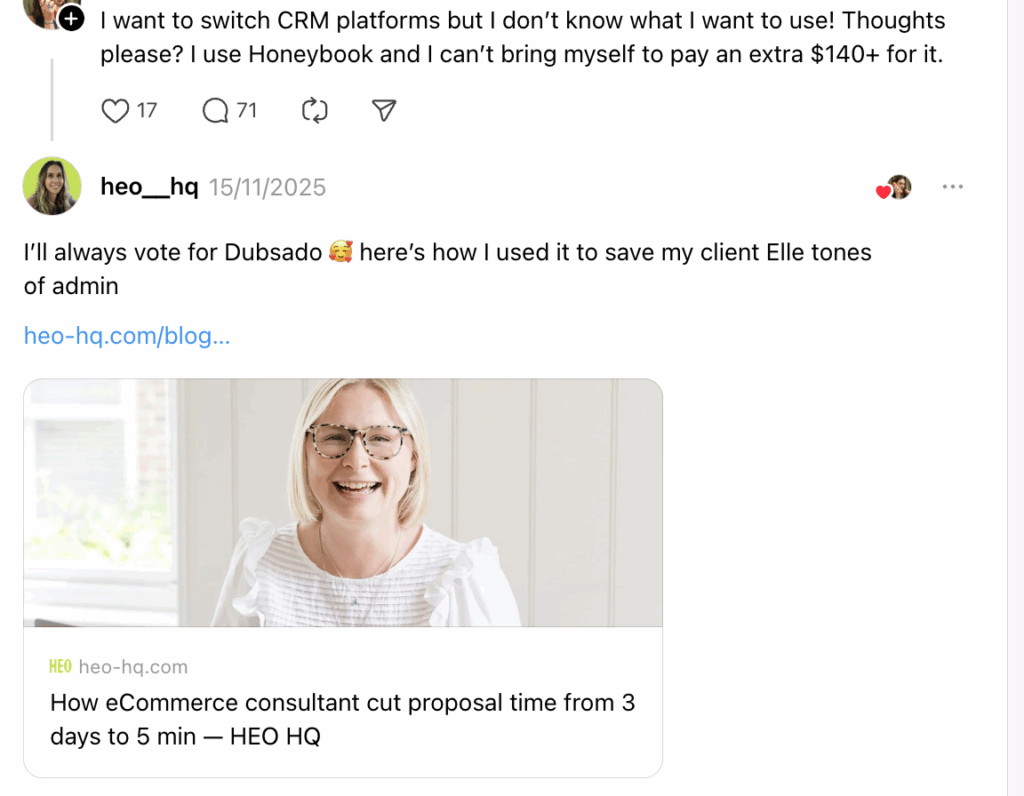
5. Linking in thread replies or social media replies.
This is the easiest way to get clicks to your site. When someone is looking for a tool that you’re an expert in or for a service provider like you, case studies are the best way to compell someone to learn more.
Like how my client, Harriet shares in the following reply.
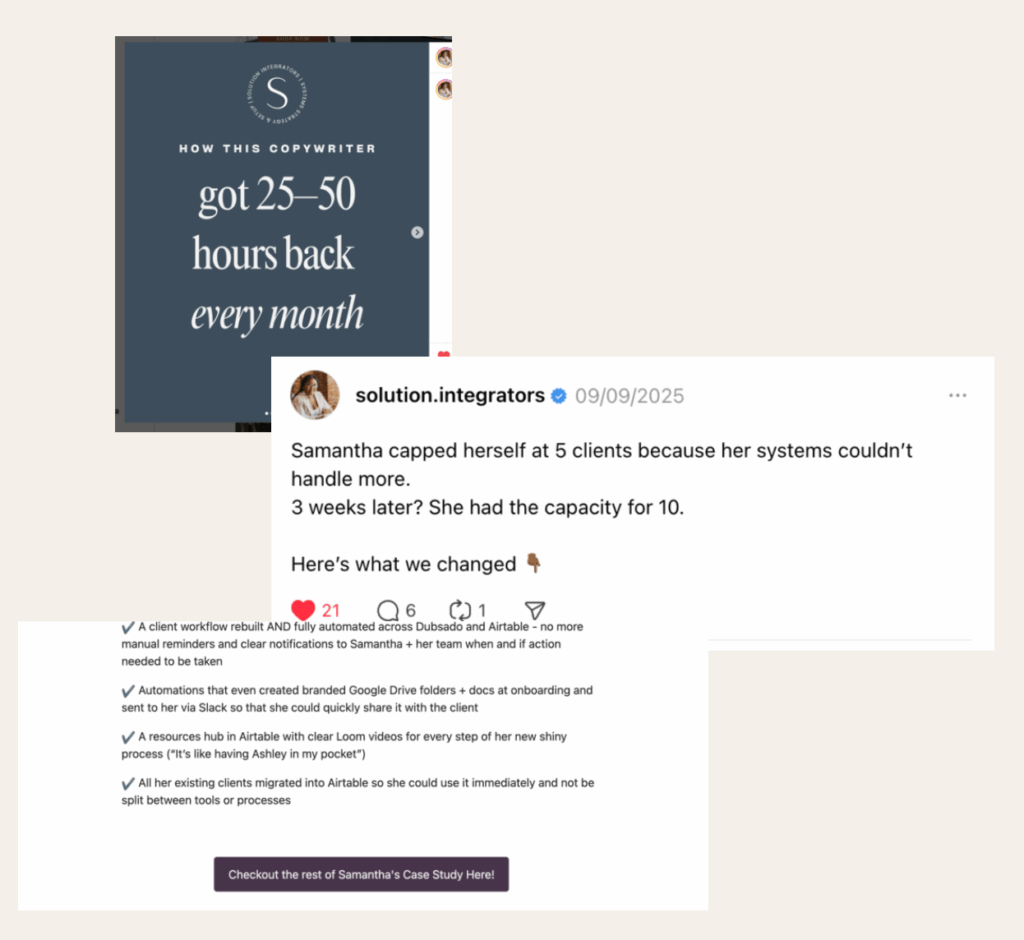
6. Repurpose it for content on all your socials, carousels, and emails.
Don’t just let it live on your site. The possibility of use-cases for case studies are endless when you see how easy it is to properly repurpose it, beyond just learning how to share testimonials.
Things my clients turn their case studies into:
– thread posts
– carousels
– Instagram reels
– blog posts
– standalone pages on their site
– in their sales and email workflows
– in their sales call and discovery call workflows
– (planned) podcast episodes
Like how my client, Ashley of Solutions Integrators, did here.
7. Linking in newsletters, sales emails, and welcome sequences.
This would need to be relevant to something specific shared in the case study.
Eg: if you’re sending a newsletter about one specific part of your offer and you have a case study that talks how you helped a client with that?
Get people to click on it!
8. Blog posts (this is what i recommend most for SEO and ease of upload since I offer on-page SEO.)
a. Like for Ashley’s case study
b. And Harriet’s case study
c. Or like another client of mine, Jereshia, did in this blog post.
9. Standalone pages ike Stephen’s (designed by the Odd Creatives).
While I do recommend using more images (with alt text for SEO), it also depends on your project, what your client is comfortable sharing in a public-facing setting, and the kind of project you ran.
(but yes, it’s a must-have for any sort of design project)
It’s easier for people to click on something when they have a reason to.
Sure, when people think of social proof, all they’re thinking about is ways to show and share testimonials.
But you want to give them context. Reasons why the results worked out as well as they did.
And for them to be able to see how you helped someone else with that? When you get as specific with it as a case study?
It becomes the easiest way to get them to learn about your offer and want in on it.
Your best bet? Case studies or sales page copy that do the selling for you.
And just so you know, this blog post is a combination of a few different newsletter editions. You should subscribe to get these in your inbox every Wednesday.
We can work together on your:
Decided you'd rather be in expert hands?
Words that build on a narrative you own and sell for you
WEBSITE COPY

Copy for your offer that gets people clicking ‘buy.
sales page copy
Get my eyes on your site + clear next steps to boost conversions.
COPY AUDIT
Sales-assets that talk up your work & convert cold buyers.
case studies

